Magic: The Gathering, long revered as the gold standard of collectible card games, has undergone a significant devolution in recent years—both in terms of gameplay and storytelling. One of the most notable shifts is the increasing integration of external intellectual properties into the game, from The Lord of the Rings and Doctor Who to Fallout, Assassin’s Creed, and Final Fantasy. While these Universes Beyond sets have generated excitement and brought new players into the fold, they’ve also sparked debate within the core MTG community—particularly among those who value the game’s original, richly built multiverse and its decades of lore.
Universes Beyond: A Commercial Triumph
On paper, the business rationale is clear. Universes Beyond sets have been financial juggernauts. The Lord of the Rings: Tales of Middle-earth set was a commercial success, attracting Tolkien fans who might never have picked up an MTG deck otherwise. These crossovers allow Wizards of the Coast to tap into well-established fandoms, leveraging nostalgia and mainstream appeal to drive sales.
For Hasbro, WotC’s parent company, this aligns perfectly with a broader strategy of brand synergy and franchise expansion. It’s easy to see why IP integration is being pursued aggressively: more attention, more players, more profit.
But the cost of this success may be coming at the expense of Magic’s own identity.
A Lore Once Legendary
For decades, MTG prided itself on its self-contained universe. From the Brothers’ War and the fall of Serra’s Realm, to the rise of the Gatewatch and the Eldrazi invasions, the game told its own stories—ambitious, complex, and uniquely tailored to the mechanics and flavor of the cards themselves. The lore wasn’t just a backdrop; it was a living, breathing narrative that evolved with each set.
Characters like Urza, Nicol Bolas, Liliana Vess, and Chandra Nalaar weren’t guest stars—they were foundational. Planeswalkers were once rare, god-like figures whose very presence shaped entire planes. Now, amidst a flood of crossover characters, the weight of these original icons seems diminished.
The tone and style of MTG’s worldbuilding once maintained a consistent mythopoeic flavor. Whether dark and gothic (Innistrad), nature-infused (Lorwyn), or science-fantasy (Mirrodin), there was always a feeling that you were exploring one cohesive multiverse. Today, pulling a Vault Boy or Ezio Auditore out of a booster pack can feel like fan fiction made canon.
A Diminishing Narrative Center
Worse still, as Universes Beyond occupies increasing design and storytelling bandwidth, the cohesion of MTG’s original plotline has suffered. The recent March of the Machine arc, meant to be a grand multiversal climax, fell flat for many fans—rushed, bloated, and emotionally shallow. Planeswalkers lost their spark (literally), Phyrexia was defeated without payoff worthy of its decades-long menace, and the Gatewatch, once central, has all but disappeared.
Meanwhile, the space once used to develop homegrown characters and planes is now filled with franchise crossovers. The once-captivating promise of new worlds to discover—Regatha (where Chandra trained), Vryn (Home of Jace), or the long-missing Karlov Manor—feels postponed indefinitely in favor of more marketable settings.
Brand Synergy vs. World Integrity
The core issue isn’t that crossovers exist. MTG has always flirted with other genres—Un-sets, parody cards, and silver-bordered experiments are nothing new. The problem is priority and balance. When more design and marketing weight is placed on external IPs than internal development, the game risks becoming a vessel for other stories, rather than a storyteller in its own right.
Magic: The Gathering is now in danger of becoming Magic: The Platform—a kind of cardboard-based Netflix, curating content from other properties rather than cultivating its own, they’re not enriching Magic’s internal narrative core. These cards and stories exist outside the continuity that made the game resonate so deeply with its longtime players and fans.
The Way Forward
Wizards of the Coast still has the chance to strike a better balance. IP crossovers need not come at the cost of MTG’s soul. A renewed focus on the mainline sets—deeper stories, stronger characters, and interconnected arcs—could reinvigorate the fan base and honor the legacy that brought the game this far.
Perhaps the answer lies in treating Universes Beyond like seasonal events rather than permanent fixtures. Or in re-investing in narrative design that allows Magic’s original planes and protagonists to shine with the same energy lavished on guest IPs.
One solutions Wizards has flirted with, but has not fully committed to is Universes Within. Having in universe versions of cards that were originally printed in Universes Beyond. This may be a great solution for some players aesthetic preferences if released en masse, but does not address the core issues discussed earlier.
At its best, MTG was more than a game—it was an ever-evolving legendarium. And if Wizards can remember that, there may still be room for both crossovers and continuity.
But if the current trajectory continues, MTG may lose what once made it magical.
Innistrad in Magic: The Gathering — A Plane of Gothic Horror and Eternal Night
Innistrad is one of the most beloved and thematically rich planes in Magic: The Gathering (MTG), known for its strong gothic horror inspiration, intricate storytelling, and diverse card mechanics. First introduced in 2011 with the Innistrad set, it has since returned in multiple expansions, including Dark Ascension, Avacyn Restored, Shadows over Innistrad, Eldritch Moon, Midnight Hunt, and Crimson Vow. This article explores what makes Innistrad a unique setting within the MTG multiverse.
Thematic Core: Gothic Horror
Innistrad is a dark and foreboding plane heavily inspired by classic gothic horror and folklore. Vampires, werewolves, zombies, ghosts, and witches dominate its narrative and gameplay. The humans of Innistrad live in constant fear, seeking protection from powerful celestial beings and religious institutions, most notably the Church of Avacyn.
The horror themes are not just window dressing—they are deeply woven into the mechanics, aesthetics, and storytelling of the sets. Each creature type represents a classic horror archetype:
Zombies (Blue/Black): Necromantic hordes, often tied to mad scientists or stitchers like the Skaaberen.
Vampires (Black/Red): Aristocratic and bloodthirsty, especially from the Voldaren bloodline.
Werewolves (Red/Green): Wild and unpredictable, with a unique double-faced card mechanic that changed between blocks.
Spirits (White/Blue): Vengeful apparitions and lingering souls.
Humans (White/Green): The struggling populace, represented across all colors, especially in tribal synergies and religious iconography.
The World and Lore
Innistrad is divided into several provinces, each plagued by supernatural threats. The human settlements are fortified and religious, led by the Church of Avacyn, which once relied on the archangel Avacyn for protection. However, the storyline takes a dark turn when Avacyn is corrupted or removed from the plane, leading to chaos and the rise of evil forces.
Some major lore beats include:
Avacyn’s Creation and Fall: Avacyn was created by the planeswalker Sorin Markov to protect humans. Her eventual madness led to her destruction, plunging the plane into turmoil.
The Rise of Emrakul: In Shadows over Innistrad and Eldritch Moon, the Eldrazi titan Emrakul warps the plane, turning horrors into cosmic abominations.
The Eternal Night: In Midnight Hunt and Crimson Vow, the balance between day and night is broken, and monstrous threats escalate, culminating in a vampire wedding that aims to cement vampire dominance.
Unique Mechanics and Set Identity
Innistrad is mechanically distinct, with each visit introducing new innovations and thematic callbacks:
Double-Faced Cards (DFCs): Debuting in original Innistrad, DFCs represent transformations, such as humans turning into werewolves or corpses becoming stitched monstrosities.
Transform: A mechanic tied to DFCs that triggers changes based on conditions like casting spells or the time of day.
Flashback and Disturb: Recurring from the graveyard, these mechanics support the horror theme of the undead returning.
Investigate and Clues: Reflecting mystery and paranoia, players generate Clue tokens that can be sacrificed to draw cards.
Daybound/Nightbound: Introduced in Midnight Hunt, this system formalizes the day-night cycle, especially for werewolf cards.
Impact and Popularity
Innistrad is one of the most successful and critically acclaimed planes in MTG history. Its cohesive art direction, compelling narrative, and resonant themes have made it a fan favorite. Many cards from Innistrad sets—like Snapcaster Mage, Liliana of the Veil, and Delver of Secrets—have seen heavy play across multiple formats.
The setting also excels in Limited and Commander formats due to its rich tribal support and flavorful card design. As a result, it continues to be a go-to plane for horror fans and players seeking a deeply immersive MTG experience.
The Ghoulcallers of Innistrad are necromancers who specialize in animating and controlling the dead, particularly zombies. They play a central role in the horror ecosystem of the plane, embodying the grotesque fascination with death, corpses, and reanimation. While zombies on other planes may be mindless thralls or magical automatons, Innistrad’s zombies—known as ghouls—often have grisly, stitched-together origins and are treated almost like tools by their creators.
Origins and Role in Innistrad
Ghoulcallers are mostly human spellcasters who harness necromantic energies, often in defiance of societal norms and religious doctrine. In Innistrad’s fragile human communities, necromancy is usually feared and outlawed by the Church of Avacyn. As a result, Ghoulcallers are typically outcasts, working in isolation or in secret.
Their craft is seen as profane and grotesque, but also disturbingly effective—especially during times of crisis, when the living are overwhelmed by vampires, werewolves, or spirits. Some see themselves as protectors of humanity in a twisted way, turning the dead into weapons to defend the living.
How They Differ from Stitchers
Innistrad features two primary types of zombie-makers:
Ghoulcallers (Black-aligned):
Use necromantic magic to raise corpses as ghouls.
Their creations are often decayed, shambling corpses drawn from graveyards.
Examples: Ghoulcaller Gisa, Ghoulraiser, Ghoulcaller’s Chant.
They rely on rituals, grave-robbing, and spiritual manipulation.
Stitchers (Blue-aligned):
Craft skaabs, Frankenstein-like zombies made from stitched body parts.
Often work in laboratories, merging flesh and magic with surgical precision.
Interestingly, Gisa and Geralf, a pair of siblings, embody this divide: Gisa is a Ghoulcaller (black mana), while Geralf is a Stitcher (blue mana). Their rivalry and antics have been featured in both cards and short stories.
Notable Ghoulcallers and Cards
Ghoulcaller Gisa (legendary creature): A powerful and infamous necromancer who raises entire zombie armies, often using sacrificial rituals.
Ghoulcaller’s Chant: A classic black sorcery that returns zombies from the graveyard, reflecting the cyclical nature of undeath on Innistrad.
Rise from the Grave, Gravecrawler, Diregraf Ghoul: These cards all embody the core mechanics Ghoulcallers utilize—cheap, efficient reanimation and an unrelenting swarm of the undead.
Lore and Culture
In terms of storytelling, Ghoulcallers tend to be:
Self-serving, reveling in their control over death.
Darkly humorous at times—some take pride in their “craft” and treat corpse-rearing like an art.
Feared and hated by most human societies, though often begrudgingly respected for their effectiveness against worse threats.
Their presence reflects Innistrad’s central tension: how far can humanity go in confronting monsters before becoming monstrous themselves?
The vampires of Innistrad are one of the most iconic and dominant monster tribes on the plane, blending aristocratic decadence with predatory horror. Unlike vampires on many other Magic: The Gathering planes, those of Innistrad are not simply bloodthirsty monsters—they are a full-fledged society, organized into powerful bloodlines, with their own culture, politics, and twisted sense of nobility.
Origins and Nature
Innistrad’s vampires are primarily black and red-aligned, with some dipping into white or blue depending on their bloodline. They were originally created by the ancient planeswalker Sorin Markov, who infused his own essence into humans to create the first vampires. His intention was to create a predator species that would keep humanity in check—ensuring humans never became so dominant that the balance of the plane would break.
They feed on blood, but many do so with ceremony or control, unlike mindless predators. Some vampires consider themselves “stewards” of humanity, while others view humans purely as livestock.
Major Vampire Bloodlines
Innistrad’s vampires are organized into noble bloodlines, each with a distinct philosophy, aesthetic, and magic alignment. The four most notable are:
1. Markov
Colors: Black and red
Leader: Edgar Markov (the first vampire, Sorin’s grandfather)
Traits: Powerful, traditional, and deeply aristocratic
Flavor: The oldest and most dominant bloodline; many vampires trace their lineage here. Known for ancient rituals and decadence.
Vampires in Innistrad are defined by class structure, tradition, and predation. They view themselves as nobility, while humans are beneath them—sometimes tolerated, often hunted.
Blood as Status: Vampires often seek the blood of specific lineages, religious figures, or mages, which they believe offers enhanced powers or prestige.
Eternal Youth and Vanity: Many are obsessed with maintaining appearance and legacy.
Courts and Balls: Elaborate gatherings are used for both celebration and assassination—especially evident in the Crimson Vow set, where Olivia hosted a grand wedding to solidify her power.
Gameplay and Mechanics
Vampires in gameplay often reflect their aggressive, synergistic, and tribal nature:
Bloodthirst, Madness, and Lifelink appear frequently.
Blood tokens (introduced in Crimson Vow) represent excess feeding—used for card filtering or value.
Tribal synergy: Many cards reward building around the Vampire creature type.
Cards like Sorin, Lord of Innistrad, Bloodline Keeper, and Captivating Vampire have been staples in both Limited and Commander formats.
Vampires vs. Humanity
The struggle between humans and vampires is central to Innistrad’s lore. While vampires claim sophistication and “order,” their predation leads to fear, suffering, and resistance. Some humans form militant orders, like the Cathars, to fight back. Others become thralls or corrupted, lured by the promise of eternal life.
The vampires’ dominance is never total—they’re often one threat among many, vying with werewolves, spirits, and cosmic horrors for control of a nightmarish plane.
The werewolves of Innistrad are one of the most iconic and terrifying creature types on the plane, embodying the theme of loss of control, dual nature, and savage transformation. Deeply rooted in the gothic horror traditions that shape Innistrad, these werewolves are not just monstrous beasts—they are often cursed humans, torn between their civilized selves and the bloodthirsty creatures they become when night falls.
Nature and Origins
In Innistrad, most werewolves are ordinary humans afflicted by a curse that causes them to transform into wolf-like beasts, usually during the night or under specific conditions. This curse is hereditary or can be spread, and it often manifests without the afflicted person’s consent.
The transformation is not just physical but deeply psychological—many werewolves lose their sense of morality and identity when they change, becoming driven by instinct and rage. Some embrace the change; others fear it, trying to resist or isolate themselves to protect others.
Color Identity
Werewolves in MTG are primarily associated with:
Red – representing rage, impulsiveness, and freedom.
Green – representing nature, instinct, and primal power.
RG (Gruul) – the core color pairing for werewolf tribal decks.
This reflects their conflict between wildness and connection to the natural world.
Daybound / Nightbound and Transform Mechanics
Mechanically, werewolves were among the first to introduce Double-Faced Cards (DFCs) in the original Innistrad set (2011). These cards show a human on one side and a werewolf on the other, flipping under certain conditions.
Original Flip Mechanic (Innistrad block):
If no spells were cast during a turn, the human would transform into a werewolf.
If two or more spells were cast in a turn, the werewolf would transform back into a human.
Daybound creatures enter as humans and transform when it becomes night.
Nightbound creatures are their transformed state and revert if day returns.
The cycle flips depending on how many spells players cast in a turn, affecting all cards with these keywords.
This change streamlined gameplay and made werewolf decks more consistent and flavorful.
Werewolf Tribes and Clans
While not as formally organized as vampires, werewolves in Innistrad do form loose packs or clans, often tied to regions like Kessig, a province overrun by wild forests and cursed bloodlines.
Some werewolves embrace their beastly identity, rejecting human society, while others struggle with their affliction. Over time, certain groups have come to view their transformation not as a curse, but as a return to natural strength—liberation from societal control.
Notable Werewolf Cards
Mayor of Avabruck / Howlpack Alpha – A human leader who becomes a werewolf pack master.
Arlinn Kord – A rare planeswalker werewolf, who embraces both her human and wolf sides; she’s a key figure in Midnight Hunt.
Reckless Waif / Merciless Predator – A low-cost creature that quickly turns dangerous when the night begins.
Tovolar, Dire Overlord / Tovolar, the Midnight Scourge – A legendary werewolf leader introduced in Midnight Hunt, who seeks to unify the werewolf clans and usher in a permanent night.
Story and Lore
The werewolves’ story in Innistrad reflects a deeper theme of instinct vs. civilization, and man vs. nature.
In the earlier sets, the curse of lycanthropy was a random, feared affliction. But by Midnight Hunt, the balance of nature and day/night has been broken. The werewolves, led by Tovolar, seek to use this opportunity to bring about an endless night—a world where their kind no longer needs to hide.
Arlinn Kord, a werewolf who still defends humanity, acts as a bridge between the wild and the civilized. Her internal conflict represents the central tension of the werewolf mythos: how to live as both predator and protector.
Gameplay Themes
Werewolves often emphasize:
Aggressive tribal synergy – creatures that get stronger when transformed.
Timing and spellcasting decisions – managing when to flip cards.
Combat dominance – big, trampling creatures that punish slow decks.
Card advantage during night – some werewolves draw cards or generate tokens once transformed.
Decks built around werewolves reward rhythm and momentum, growing more dangerous the longer they maintain night.
The Church of Avacyn is the central religious institution on the plane of Innistrad, and it plays a vital role in the lives—and survival—of humanity. For generations, it was the primary bulwark against the supernatural horrors that infest the plane: vampires, werewolves, spirits, demons, and the undead. The Church’s faith centers around the archangel Avacyn, a divine protector who once kept evil at bay and gave humans hope in an otherwise terrifying world.
Origins and Purpose
The Church was founded to spread the worship of Avacyn, an archangel created by the planeswalker Sorin Markov. Sorin, a vampire himself, recognized that unchecked monsters (including vampires like himself) would eventually wipe out humanity, leading to the collapse of Innistrad’s ecological and magical balance. To prevent this, he used his vast magic to create Avacyn—an immortal being of order and protection.
From this act, the Church of Avacyn was born. It became the heart of human civilization, responsible for:
Blessing and sanctifying homes, graves, and weapons
Training Cathars (holy warriors who hunt monsters)
Preserving warding magic and protective rituals
Interpreting omens and celestial alignments
Guiding the moral and spiritual lives of Innistrad’s human population
Key Beliefs and Symbols
The Church teaches that:
Avacyn is the divine protector of the innocent.
The Helvault, a silver prison, holds back the darkest threats (including demons and other cursed beings).
Holiness and purity repel evil.
Death is not the end if the soul remains untainted.
The symbol of Avacyn—a curved silver collar forming a circular cross—is ubiquitous, used to ward off evil and sanctify objects. Silver is also a sacred metal, effective against many supernatural creatures, particularly werewolves and vampires.
The Role of Humanity
Humans on Innistrad live in fear of the darkness—literal and figurative. Most human settlements are walled towns and villages where the Church is central to daily life. The average person depends on:
Wards and blessings for protection
Traveling priests or angels for guidance
Militias and Cathars to defend against nightly horrors
Humanity is fragmented across provinces like Thraben (the Church’s seat of power), Kessig, Gavony, and Nephalia. They struggle for survival, often relying on faith more than force.
Despite this, humans are resilient and adaptable. They cultivate strong communities and folk traditions, blending Church doctrine with old superstitions and rural customs. This creates tension: some trust only in the Church, others in ancient charms, and some in neither.
Cathars: The Church’s Warriors
The Cathars are the military arm of the Church—paladins, priests, and monster hunters who travel from town to town defending the faithful. They are armed with silver weapons, relics, and divine magic. Key roles include:
Inquisitors: Root out cults, heretics, and supernatural threats
Exorcists: Battle spirits and possession
Knight-Captains: Lead large-scale campaigns against monsters
Famous Cathars like Thalia, Guardian of Thraben, exemplify the Church’s ideal: courageous, faithful, and willing to make hard choices in defense of others.
The Fall and Fracture of the Church
Over the years, the Church of Avacyn has suffered multiple catastrophes that shook its foundations:
1. Avacyn’s Madness
In Shadows over Innistrad, Avacyn becomes corrupted—driven mad by the influence of the cosmic entity Emrakul. She begins turning against her own faithful, seeing them as impure. Sorin is forced to destroy her, shattering the Church’s spiritual core.
2. The Helvault’s Destruction
Previously, Avacyn had sealed powerful demons inside the Helvault. Its destruction released them back into the world, including the archdemon Griselbrand, one of Innistrad’s greatest threats.
3. Rise of the Eternal Night
By the time of Midnight Hunt and Crimson Vow, the balance of day and night is breaking. The rituals that once protected humanity are failing, and the Church is in crisis. Some clergy remain faithful, others lose hope, and many communities are left to fend for themselves.
Themes and Flavor
The Church and humanity reflect Innistrad’s core theme: survival in the face of overwhelming darkness. The Church’s rise and fall mirror the fragility of hope. It also explores:
Faith vs. fear
Order vs. chaos
Corruption within institutions
Light as both guidance and weapon
Avacyn, once a beacon of salvation, becomes a cautionary tale about power unchecked—even divine power.
The spirits of Innistrad are the restless dead—ethereal remnants of souls that linger after death, often because of unfinished business, trauma, or divine injustice. As with all aspects of Innistrad, these spirits reflect the plane’s deep commitment to gothic horror: they are not mere echoes of the past but often tormented, vengeful, or even protective entities that shape the world of the living.
Nature of Spirits
Unlike zombies (corporeal reanimated bodies) or demons (manifestations of evil), spirits in Innistrad are non-corporeal beings composed of ectoplasm, memory, emotion, and will. They haunt graveyards, battlefields, churches, and homes, usually tied to the location or event of their death.
Spirits can vary dramatically in temperament and behavior:
Vengeful spirits seek justice or retribution.
Mournful spirits linger due to grief or trauma.
Guardian spirits may defend loved ones or sacred sites.
Malevolent wraiths attack the living indiscriminately, warped by anger or madness.
Colors and Mechanics
Innistrad’s spirits primarily reside in:
White – Protective, orderly, and tied to the Church (e.g., guardian spirits, angels who died).
Blue – Subtle, evasive, and tricky (e.g., ghosts with magical effects or illusions).
Occasionally Black – Especially when they are tormented or corrupted.
Mechanically, spirits often feature:
Flying – Representing their incorporeal nature.
Disturb (Midnight Hunt, Crimson Vow) – A mechanic allowing creatures to return from the graveyard as ghostly spirit versions of themselves on the back face of double-faced cards.
Flash, Hexproof, or Phase Out – Representing their elusiveness or spectral existence.
Death triggers or graveyard interactions – Many spirits activate abilities upon dying or help control what happens in the graveyard.
Examples:
Mausoleum Wanderer
Selfless Spirit
Geist of Saint Traft
Drogskol Captain
Drogskol and the Church
One of the most notable spiritual factions is the Drogskol, a collective of spirits who served the Church of Avacyn in life and continue to do so in death. These spirits often wear ghostly versions of their armor and serve as phantom protectors of holy sites, especially after Avacyn’s fall.
They are:
Organized and disciplined.
Willing to fight alongside Cathars and other Church warriors.
Embody the ideal of righteous death—their faith was so strong it carried into the afterlife.
Spirits and the Afterlife
On Innistrad, death is not a guarantee of peace. The barrier between life and death is thin, and the dead often return because:
The Church failed to properly sanctify the dead.
Dark magic (necromancy or demonic influence) disturbed their rest.
The person died violently or with unresolved guilt.
Eldritch corruption from Emrakul distorted the spirit world.
This makes spirits a constant presence in the daily lives of Innistrad’s people. Most homes and graveyards are protected by wards and rituals to keep ghosts at bay or help souls pass on.
Famous Spirits and Cards
Geist of Saint Traft – A powerful spirit of a devout holy man who still fights evil.
Lingering Souls – A haunting representation of many spirits refusing to move on.
Spectral Procession – Summons a host of ghostly defenders, often used by the Church.
Drogskol Captain – A spirit knight who boosts and protects other spirits.
Spirits in the Story
Spirits have been central to various storylines:
During the rise of Avacyn, many spirits found peace and were guided to the afterlife. But after her madness and destruction, spirits began rising again in large numbers, some seeking justice, others simply lost and dangerous.
In Shadows over Innistrad, Geists grew restless and angry, often appearing around corrupted sacred grounds.
In Midnight Hunt, the imbalance of the day-night cycle and failing rituals caused spirits to manifest uncontrollably, further endangering the living.
Themes and Flavor
Spirits on Innistrad represent:
The consequences of unacknowledged trauma
The fragility of spiritual peace
The persistence of love, duty, and vengeance beyond death
A breakdown of the barrier between life and afterlife
They are deeply tied to the emotional and religious core of the plane—far more than just spectral monsters, they symbolize the things humanity can’t let go of.
Innistrad and Cosmic Horror
The defeat of the Eldrazi on Innistrad stands as one of the most surreal and terrifying events in Magic: The Gathering lore, focusing on the rise and eventual self-imprisonment of the Eldrazi titan Emrakul. In contrast to the brute devastation of the Zendikar invasion, Emrakul’s presence on Innistrad brought a wave of cosmic corruption, creeping madness, and grotesque biological distortion.
Background: Why Was Emrakul on Innistrad?
After the defeat of Ulamog and Kozilek on Zendikar (Battle for Zendikar), the third Eldrazi titan, Emrakul, mysteriously vanished. She eventually emerged on Innistrad, drawn not to destroy the plane outright, but to reshape it in her own unknowable image.
Unlike the other titans, Emrakul’s invasion was subtle and insidious. She did not annihilate; she warped reality, biology, and minds—corrupting nature, mutating life, and driving both people and angels into madness. This culminated in the events of the sets Shadows over Innistrad and Eldritch Moon.
Signs of Emrakul’s Influence
Emrakul’s arrival was hinted at through:
Madness in the clergy and angels, including Avacyn herself.
Biological mutations—livestock and people began to sprout tentacles, eyes, and unnatural growths.
The Drownyard Cult—a secret group devoted to Emrakul’s arrival, orchestrating chaos.
The Nahiri-Sorin conflict—Planeswalker Nahiri lured Emrakul to Innistrad as revenge against Sorin Markov, blaming him for Zendikar’s suffering.
The Rise of Emrakul
In Eldritch Moon, the veil is lifted: the source of the madness is revealed to be Emrakul, whose form looms over Innistrad’s skies, blotting out reason and reality itself.
Brisela, Voice of Nightmares: Two angels (Bruna and Gisela) merge into a grotesque Emrakul-inspired abomination, showing the depth of her corrupting power.
The countryside mutates, with entire regions becoming fleshy, fungal, and alien.
Inquisitors, cathars, and townsfolk go mad, forming cults or becoming twisted themselves.
The very fabric of the plane starts to mimic the alien biology of Emrakul, suggesting she doesn’t destroy planes like the other titans—she rewrites them.
The Gatewatch’s Response
The Planeswalker group known as the Gatewatch (Jace, Liliana, Gideon, Nissa, and later Tamiyo) travel to Innistrad to stop Emrakul. Their plan initially involves brute force and necromancy, with Liliana’s zombie army (raised using the Chain Veil) distracting Emrakul’s spawn.
But raw power isn’t enough—Emrakul is on an entirely different scale, both physically and metaphysically.
The Defeat: Emrakul Imprisons Herself
The turning point comes not from combat, but from understanding Emrakul’s intentions.
Tamiyo, the moonfolk Planeswalker, attempts to use a forbidden spell from her scrolls—one not of her own making.
The spell is amplified and adapted by Jace, Tamiyo, and Nissa, and it targets Innistrad’s silver moon—Innistrad’s most magically significant celestial body.
They use the moon as a prison, channeling a massive binding spell to trap Emrakul’s physical form.
But then the twist: as the spell takes effect, Emrakul speaks—and chooses to be imprisoned.
“This isn’t the time. Not yet.”
Emrakul, in her alien logic, willingly allows herself to be sealed within the moon, suggesting she has a larger plan or purpose far beyond mortal comprehension. She isn’t defeated in the conventional sense—she ends her own invasion when it no longer serves her unfathomable goals.
Aftermath
The moon becomes visibly corrupted, with a monstrous eye-like mark indicating Emrakul’s presence.
Tamiyo is later possessed by Emrakul, implying ongoing psychic influence even in containment.
Avacyn is gone, having been destroyed by Sorin, and the Church is shattered.
Sorin is trapped in stone by Nahiri, completing her revenge.
Innistrad survives, but it is scarred, traumatized, and forever altered.
Themes of the Eldrazi’s Defeat
Madness and Cosmic Horror: Emrakul’s invasion was a Lovecraftian nightmare. The defeat isn’t triumph—it’s survival.
Hubris vs. Reality: The Gatewatch learns that not all problems can be solved with force; Emrakul is beyond their understanding.
The Unknown: Emrakul remains a mystery. Her choice to be sealed raises unsettling questions about what comes next.
Finale – ish
The defeat of Emrakul on Innistrad was not a conventional victory, but a temporary reprieve granted by the titan herself. In doing so, Magic: The Gathering delivered one of its most haunting and ambiguous story arcs—a tale not of conquest and heroism, but of unanswered questions, deep horror, and uneasy peace. The moon may hold Emrakul for now, but her influence lingers, and the people of Innistrad must live with the knowledge that true madness once touched their world—and may return.
Conclusion
Innistrad stands out as a masterclass in world-building, blending horror, mechanics, and story into a unified vision. Whether you’re exploring the werewolf-infested forests of Kessig or unearthing secrets in the haunted town of Thraben, Innistrad captures the imagination like few other planes in Magic: The Gathering. With its ever-evolving threats and atmospheric storytelling, it remains a hauntingly iconic part of the MTG multiverse.
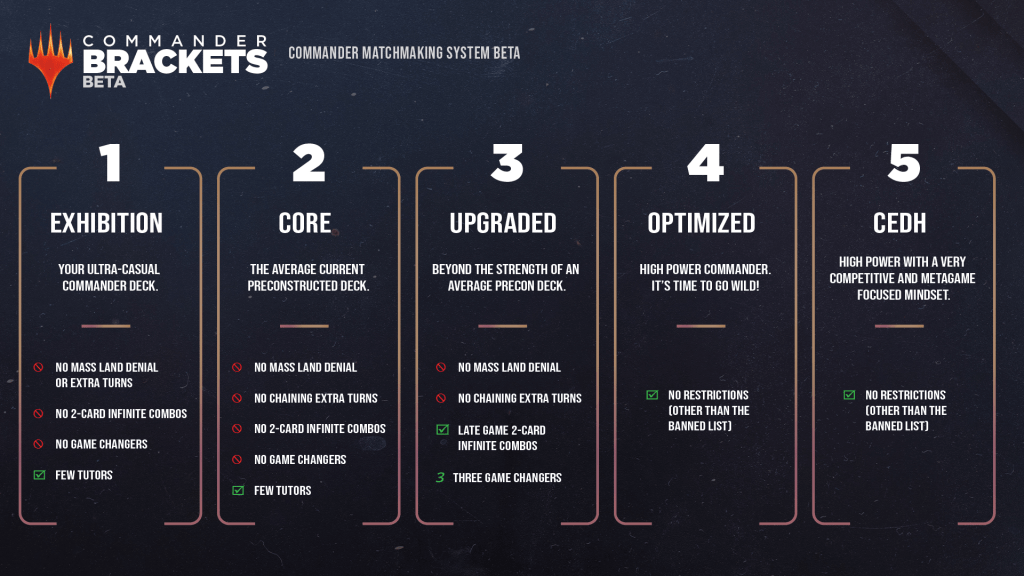
So what does this mean for most commanders players… nothing. For most people, they will continue playing with their friends using their own power assessments to try and play games with decks they are familiar with.
However, this will help with the MagicCon problem of asking “What level is your deck?” and almost universally getting a response of “7” usually with some kind of qualifier of what kind of 7 the deck is.
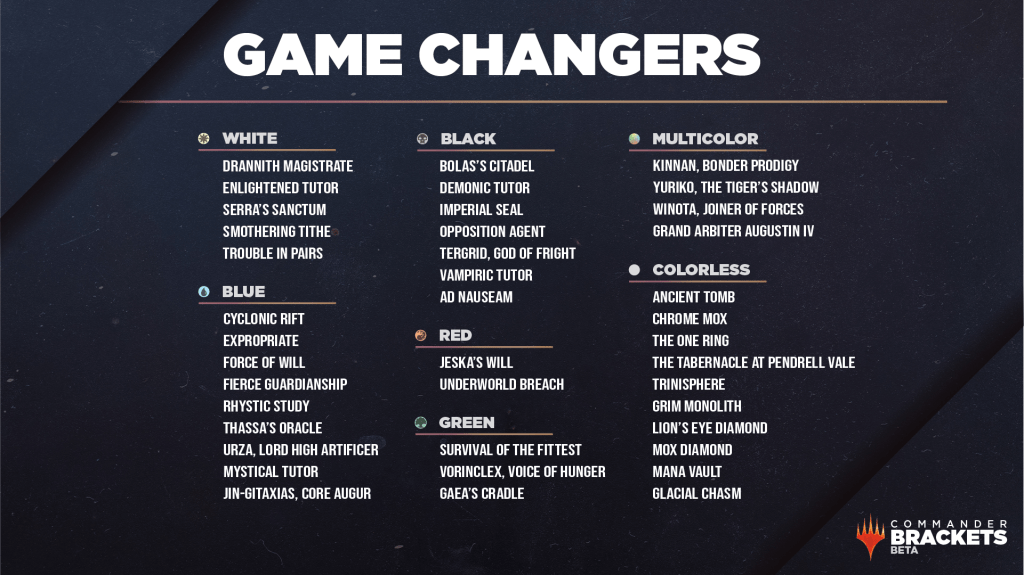
Looking at my own personal decks I am seeing that it is clear which are 1s and 2s and which are 4s. I do not really think I have any CEDH decks. My main concern here is the bracket 3 decks. Looking at the Game Changers list and many of my own decks, I have noticed that in this system many decks that I would consider the similar power level are now in different brackets. For instance my Eriette deck and my Heiko deck would now be considered bracket 3 where as my Lumra deck is considered a two. They are all solid decks, but they are not designed to close out a game fast, I usually describe them as being tuned decks. I would feel comfortable playing them all against the old 6s or 7s or even 8s. That said, they are not looking to close out a game until later turns, 6 or later at least. Right now, the only thing putting Eriette and Heiko in a category in 3 category is that they each have one “Game Changer” with Serra Sanctum and Jeska’s Will respectively, where Lumra does not. With the current system adding this game changer “mechanic” to the ranking system I think players will put too much emphasis on those cards. While I do think that list will be expanded as this system is tested, I think it is better to use the Game Changer cards as a guide, similar to their reference to mass land denial. Saying a 3 can have up to 3 game changers almost gamifies the process of deck building. While my Heiko deck has won against fine tuned decks, and I would consider it a 3 or 4, by the current system I could take out one card, Jeska’s Will, and easily claim it as a 2. Now, I would not do this as I understand the spirt of the rule and have a long tenure of assessing power levels, but I can certainly see how the addition of game changers could confuse new players.
Well that turned out to be more negative than I meant. I will certainly be trying this during MagicCon Chicago and we shall see if my concerns are warrented or not. In the end this is a beta, so testing and failing is part of the process. I appreciate Wizards making an effort to help the community find well balanced games.
TLDR: There will be a 17 person panel that advises Wizards on the decisions it makes for the format. Those people are from various levels of play from casual to cEDH and include people from all over the world. Some members will stay on, but some will rotate out after one year. The final call on all decisions will be Wizards, there is nothing holding Wizards to decide things based on the advice of the panel.
So, what does this mean going forward? While some of my more casual play friends may be worried, I am excited. As a competitive player in Modern, Standard and Legacy I am excited to see what Wizards does. Many of the bannings in Commander have not always made sense to me. I understand there are some cards that just don’t work in the format, or are so warping that they need to be banned. However, most of the list I felt would be better handled by rule 0 conversations. Why should Mana Crypt and Jeweled Lotus get the ban hammer, while Ravages of War and Armageddon do not. These discrepancies are what I hope Wizards cleans up. eventually make a true ban list where any card NOT included in the ban list is acceptable to play.
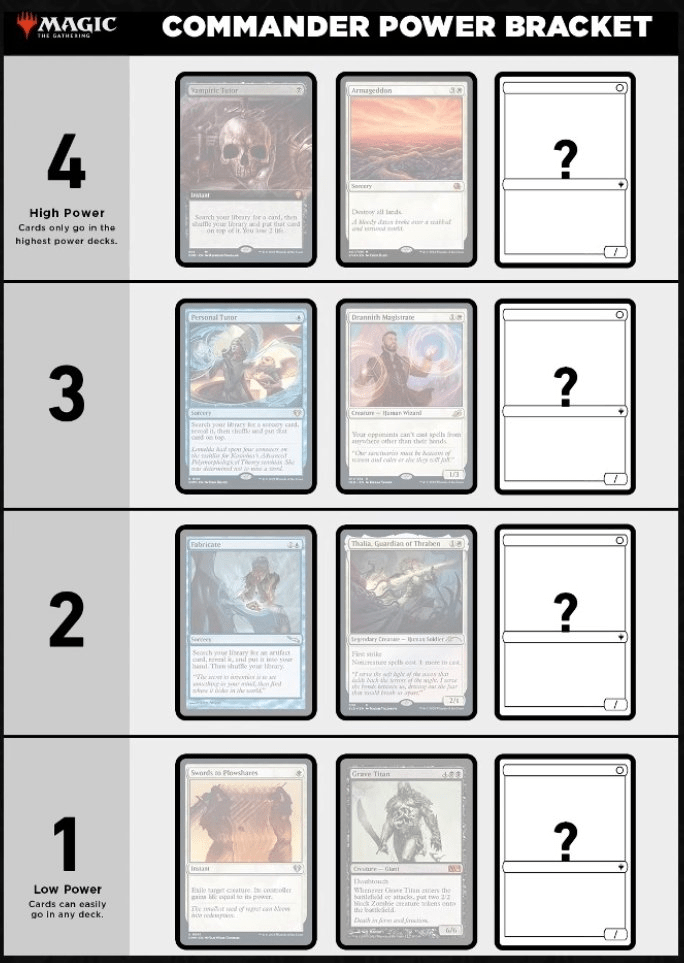
The bracket system. This is the current template Wizards seems to be playing with for Commander. A tier system by which players can easily (hopefully) identify how powerful their decks are and relay that to other players to match power levels. This seems like an over complicated version of what we already have. It was not uncommon to sit down at a table and have someone give a vague description of their deck, a power estimate, and then you shuffle up and play. I always felt this was good enough. Even just saying, this is a competitive deck, but not as good as a cEDH deck was enough to tell other players to put their precons away. Or vice versa, when someone would sit down with an upgraded precon, say they were relatively new and that they were hoping to have a more fun and crazy game, well then us veteran players know to reach for that one pet deck we have that 1 in 100 times does something wacky. Was this system perfect, nope. Did people sometimes get stomped, yup. But we were able to have a discussion for game two, maybe make some adjustments and get playing again.
I am not sure a bracket system can improve on this. Cards like Armageddon are not at the same power level as Demonic Tutor, but listed as examples as potential “Tier 4” cards in the bracket system. If you are playing a tutor based combo deck and I am playing mass land destruction jank, you will win, the vast majority of the time. That means a power level discussion is still needed. However, the bracket system may just make that more complicated.
In the end, I am hoping we get a more thought out banlist, with reasoning and purpose behind bans and I would like to see more things come off that current list. As for the power level system vs a bracket system, I think a power level system with better descriptions of what each level means, would be better than certain cards getting a rating. I would hope for some official version of this:
1 – Complete jank/random pile of cards. 2 – Most precons. 3 – Good or upgraded precons 4 – Decks that only do one thing 5 – Casual deck with poor interaction and/or no wincon. 6 – Casual deck with some of the below but not all the way there. 7 – Focused casual deck, good at doing what it is trying to do. 8 – High powered but not quite cEDH, could win a game within 5-6 turns. 9 – Fringe or outdated cEDH, can win a game within 5 turns constantly. 10 – True cEDH, win as fast as possible with ways to protect your win con. Wins possibly even in the first few turns.
I do not want to take credit for the above list, it is adapted from many found across the interwebs.
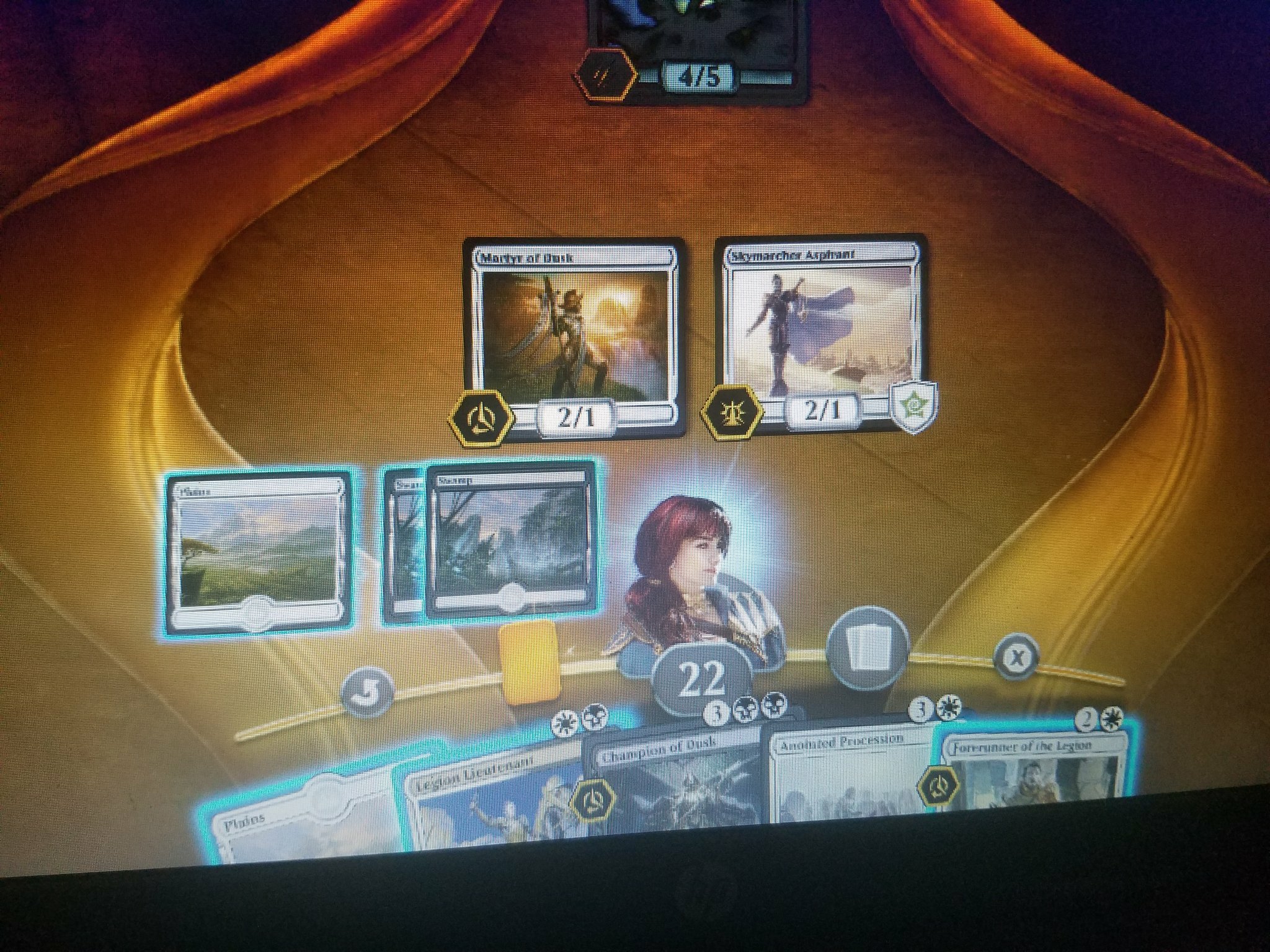
I have had the opportunity to play the new Magic: The Gathering online client MTG Arena. I will say it is a fun and engaging experience. There are some things I like and some things I dislike about the system. To begin, in Arena you are given a decent amount of cards to start and they are formulated into introduction pack type decks for you to use from the first moment you sign on. These decks are fun and can be a great way to learn the game. In addition, there are booster packs available for you to open and edit the decks provided or make new ones yourself. However, this is one of the main problems with Arena. In order to upgrade your decks, you must either pay for packs, or win packs by grinding games online. There is no trading (currently) in Arena, and thus, in order to make a deck to the specifications you want, you need to pull the appropriate cards from your packs. There is a wild card system in place where one of the cards in your pack may be a wild card, thus allowing you to turn it into any card of the same rarity (which is a one-time use), but they do help with securing playsets. The ability to purchase packs for cash also skews the game in favor of those willing to spend the cash in most cases. The cards are still randomly slotted into the packs, so there is no guarantee you will get the cards you need. I have thoroughly enjoyed grinding games and watching my deck get better incrementally as I pull new cards and it has made the opening of digital packs a much more exciting experience. I prefer it to simply going online and buying cards from an online vendor to have them traded to me. That being said, I can see the in game economy getting out of whack pretty quickly, once players start to secure bona fide decks since there would be no real separation from the participants playing some form of the intro decks. Winning, not just playing, games or completing the challenges are the only way to earn packs or coins, so at some point the underpowered decks will find it more and more difficult to upgrade. When it comes to game play, the graphics and mechanics engine is great. The animations, look and feel realistic and music score make it a truly engaging experience. Set stables such as; Hazoret or Glorybringer have full animations that come out of the cards, planeswalkers have voices, and the combat graphics make the game far more engaging than something like MTGO and are much closer to the dynamic feel of Duels of the Planeswalkers. The turn mechanics are also very good and are set up to expedite gameplay. The game automatically yields to the opponent if there is no possible play, taps mana for you upon castings spells and will skip phases of combat if nothing can be done. The key here is this can all be turned off manually if you want to, but leaving it on does not come with the risk of clicking through an important phase by accident. So something that I do hope is expanded upon in the future is the number of cards available in Arena. Currently, there is a limited card pool that does not even encompass standard, the oldest set in the system is Amonkhet. Also, the current set up for draft is extremely infrequent and thus really holds back the system. I am sure this is something that will be added after the Beta, so for now, I will not gripe about it too much. The thing I may be looking most forward to is finally being able to play this against my friends with Macs and even counsels in the future, since this was designed on an engine that can be used across platforms. All in all, I have enjoyed the Arena Beta and am looking forward to see how it develops in the future and post Beta. I do hope the potential economy issues are fixed in its next iteration, but nevertheless, I think this is a great step forward for online play. If you get paired against OsoGladiator, that’s me!
So we will soon have 4 new tribal commanders and 4 decks to play with them. So rather than speculate on which tribes we will get, or if they decks will be balanced, or even what colors they will be. I thought it would be fun to explore one of my favorite tribes.
Zombies!
I sincerely doubt that Zombies will be one of the tribes that we end up seeing in the 2017 printing of commander product. They are already a very well supported tribe, and other than perhaps receiving a five color commander there is not much more they need; in comparison to many of the other tribes in magic, I am looking at you Minotaurs. They also were shown a lot of love recently in the ripped from a horror novel plane of Innistrad and with the mummified servants on Amonkhet.
So why Zombies? For me it has always been a fascination with the lore of zombies, they have always been one of the most fearsome beasts of the old horror genres. I feel with the amount of pop culture screen time they have received of late, they have lost some of their fervor, but to me the slow, methodical, and relentless aggression was always much more troublesome than any of the werewolves, vampires and other creatures that the heroes of my youth used to face off against.
So how to get that idea, that relentlessness, that ever growing threat to appear upon the battlefield of Magic? Well the game designers at wizards have given us quite a few ways to slowly drag down your enemies with the hordes of the undead. Cards like Diregraf Captain and Plague Belcher give us a way to make ever opponent pay for wrathing or killing parts of our board; draining each opponent one life at a time. Having sacrifice combos in conjunction with that drain like the Phyrexian Alter and Grave crawler can also be a sure way to win. Other creatures like Diregraf Colossus or Unbreathing Horde grow stronger the more Zombies you control, and you even get credit for those in the graveyard. Finally there are cards like Empty the pits and Army of Darkness to grow your horde quickly.
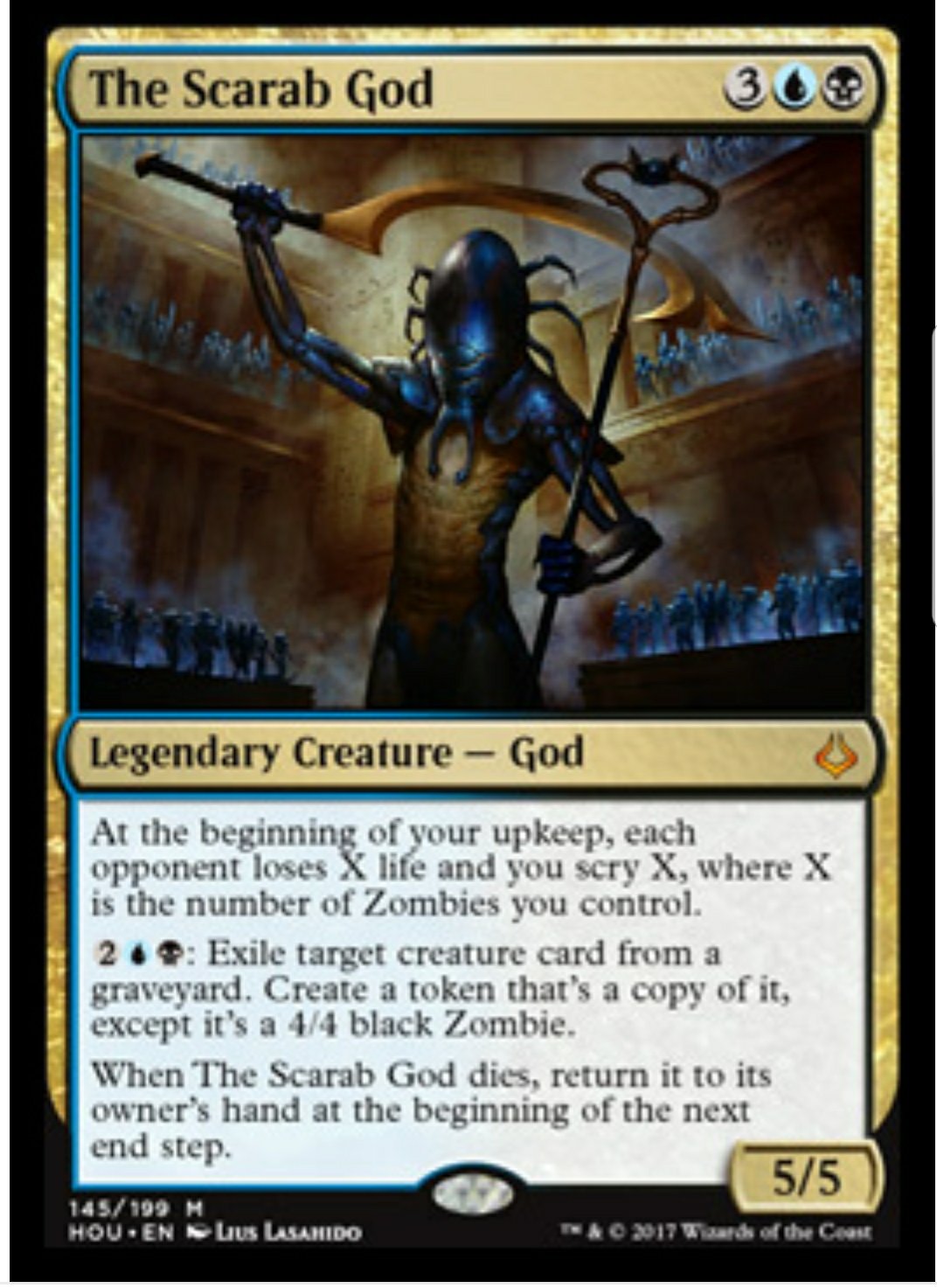
Currently my favorite commander to run them with is the Siblings, Gisa and Geralf, although with the coming of hour of devastation I may look to The Scarab God to take their place. I have also toyed with the idea of having Sidisi, Brood Tyrant take command to add green to the mix. I can post my list later if there is interest; it is a bit different than some of the other ones I have seen floating around.
So there you have it, that is my favorite tribe for commander, or I should say in all formats.
What is your favorite tribe? Do you have a certain tribe you would want to see in this year’s release?
Let me know!
Edit: I included the Zombie Tribal Deck I built below, feel free to check it out.
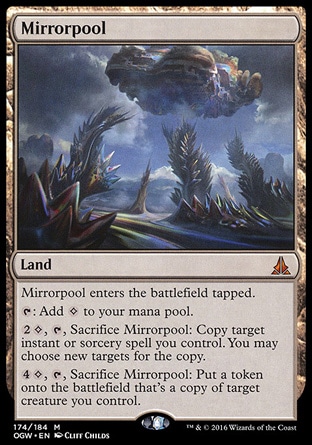
Magic the Gathering and Wizards of the Coast like to give us hidden gems for EDH all the time that are just waiting to be discovered. Then again, there are cards that are just asking to over perform. Mirrorpool is one of those cards.
With the ability to be a utility land in any deck, this card can be an secret weapon, yet I very rarely see it across the table. Mirrorpool has a couple of obvious uses, giving good value off of good spells. But when used to double a spell like that makes tokens when a card like Purphoros is out, it can end the game in a hurry, especially for only 3 mana.
The second ability is no joke either. Think about copying utility creatures like Consecrated Sphinx to gain card advantage or having an Oloro on the battlefield and in the Command zone. This card can break games wide open.
This is one of those cards that is often over looked, but can very easily turn into a game ender. It also is rarely a dead card since at the worst, its a land that that taps for colorless and at best you can twin cast your game winning spell when the first is getting countered.
There is an argument to be made that it might be too slow, however since most people do not have a way to remove a land, it can be an easy way to sneak in a win even if it has to make it around the table.
What are your thoughts on Mirrorpool?
Image is used for reference only and is the product of Hasbro and Wizards of the Coast.
So have you ever sat down to play a game of Magic and been surprised to see your opponent was playing a proxied card? In general I tend to think it is bad form to not notify your opponent(s) ahead of time that you will be using cards outside of the regular tournament legal varity. Admittedly this has never really been a problem with the write “Force of Will” on an island proxies. I have however, run into individuals that use printed proxies.
These proxies tend to be direct copies of the card, magic back and all. Now, as a player who has collected or paid for cards it does bug me when I am not told of a card being fake ahead of time. This also extends over to the gold boardered cards from the World Championship Decks. I think these cards were fun to play with the championship decks for fun or practice, but not to be used against unsuspecting opponents.
I should be clear, as long as its discussed ahead of time, all is fair. I have run into a few playgroups now who use proxy cards, without notification or notice and it was just surprising. So am I in the minority? Is this something that many playgroups do? Or maybe just for certain formats like commander?
Making sure you enjoy your hobby is important, but it is also important to make sure others enjoy theirs too.
Whenever you sit down to play a new game you always face the social question of how competitive to get. Some people can be finely tuned to this; maybe there was a plethora of team sports growing up and have built up a mental fortitude to stressful situations, maybe they are supremely confident with their abilities, or maybe they truly don’t care who wins and they are there for the good old entertainment.
So how do you manager another player’s competitiveness? Now in the tournament setting this is much easier. You have signed up to play to win, and although you may find yourself beating someone who got mana-screwed, or facing a slaughter yourself, it is expected that at the end of the match a you’ll shake hands, say good game, and get on with your day. This can be different with Casual play or even FNM. Friday Night Magic has casual players as well as spikes, where as other formats, such as commander, also have extremely varied play styles and play levels.
Now, there is no way, short of asking, to truly know what level of experience, competition level or how tuned their deck is. So how do you manage your competitiveness to be appropriate so that both players have fun. This is where a little self reflection is needed. I know I have certainly been guilty of taking our hobby too seriously. Taking things personally when I shouldn’t have, making things overly competitive in a casual setting. Here is where you must learn to be a gracious loser and an even more gracious winner.
When someone beats you it is important to realize you don’t win every game, even if you are the superior player. Take a look at the pros winning percentages, these are arguably the best in the world, and they do not have 100% winning percentages, they do not even have close to that. Also, if you are not losing games then you are not playing tough enough competition. This will end with your skill set stagnating. You should be losing games. So how do you maintain being gracious loser. First suggestion… Don’t flip the table. But seriously, losing sucks, it does, accept that it sucks and expect to lose sometimes. That way when you do you can be gracious. When you lose make sure to be sincere in your “good game” hand shake. Stay and discuss the game with your opponent, make sure not to just say the things you did wrong. This can make it sound like you are short-selling their ability, and instead saying the victory came from your mistakes. It very well might have, but if nothing else they capitalized at it. Make sure to be comfortable complimenting them on this.
On the other hand, winning can seem easier, but it is even more important here to be gracious. I mentioned before, losing sucks. You know it, I know it, your opponent knows it. So when you win, again, it is good to stop and say good game. If it was a landslide victory you can always comment on the things you noticed that lead to it. Maybe they got mana screwed, maybe their deck just didn’t draw the cards they needed, it happens. Maybe you got a nut draw or just straight out played them. Regardless, it is a good sport, who looks for a way to compliment and respect his/her opponent even in a sound victory. So be gracious. If they are a new player and ask you questions, offer advice. Be a good example of the player you want to play against.
We play a game that is meant to be fun, part of what makes it fun is playing competitively. You don’t have to stop playing competitively to make sure your peers are having fun. This game is about social interaction, it is about helping yourself and your opponents enjoy the game. See ya at the table.



 Osogladiator